
Rising Power
What Sourdough Reveals About Revolution

My sourdough starter was dead again.
As I stared at the lifeless glob of flour and water that was supposed to be bubbling with activity, I realized something fascinating: the same principles that make bread rise are secretly driving every major political movement in history.
You probably think I've lost my mind. Stick with me for a moment.
During the pandemic, some of us became amateur bakers. We all learned about starters, fermentation, and the patience required to make a proper loaf of bread. But hidden in this process is a profound truth about how ideas spread and movements gain momentum.
It starts with a seed.
The Invisible Force
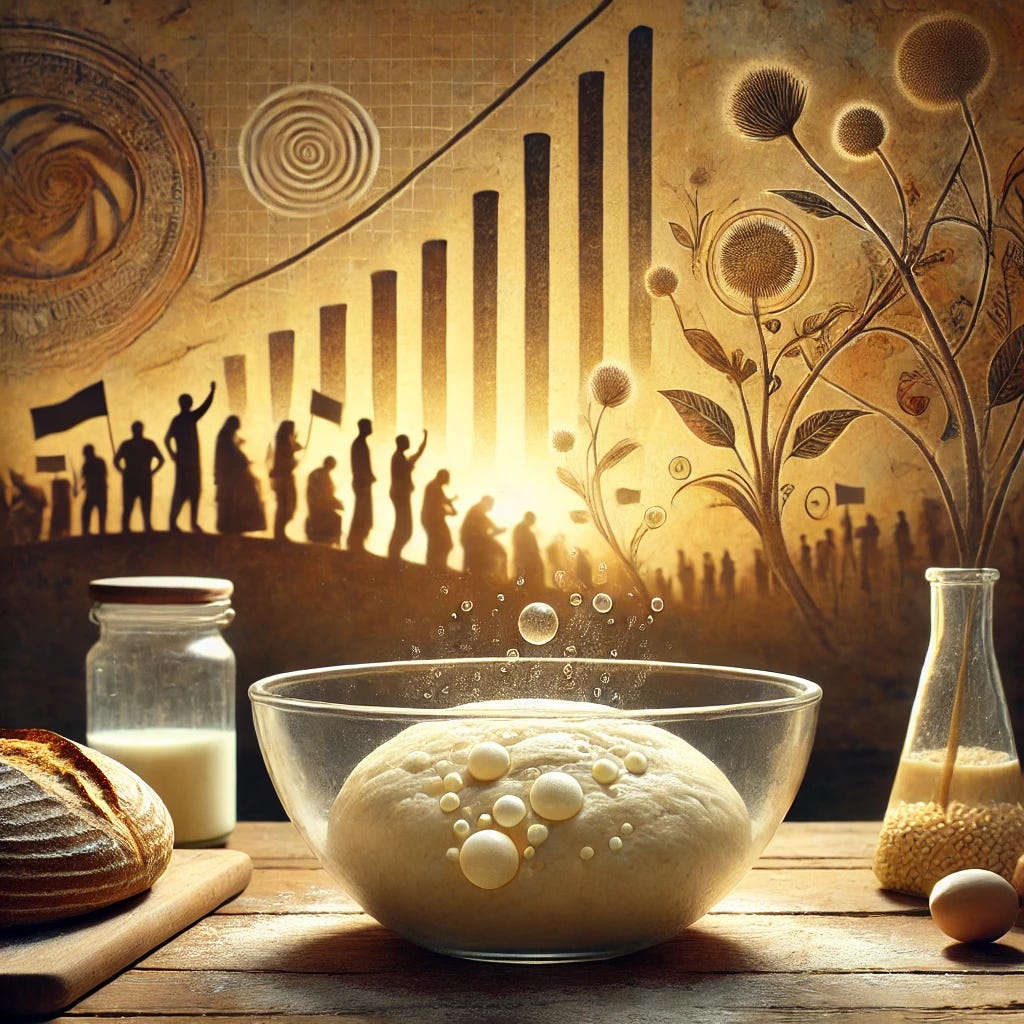
When you mix flour and water and introduce the right conditions, something magical happens. Wild yeast spores, invisible to the naked eye, begin to multiply. They create bubbles of carbon dioxide that slowly but inevitably cause the dough to rise.
But here's what most people miss: it's not just about the yeast. It's about the environment you create.
Too cold? Nothing happens.
Too hot? The yeast dies.
Wrong pH balance? No rise.
Side Note: I learned this the hard way after killing several starters by being overzealous with temperature. Turns out you can't rush fermentation by cranking up the heat - a lesson that applies far beyond breadmaking.
The same principles govern how ideas ferment in society. Every major movement started with an invisible force - an idea that spread under the right conditions.
Take the American Revolution. The seeds were there: desire for representation, frustration with taxation, dreams of self-governance. But it wasn't until the right environment developed that these ideas began to "ferment" into action.
The Growth Curve Nobody Sees
Here's where it gets interesting.
Both bread and political movements follow a sigmoid curve - what mathematicians call logistic growth. It looks like this:
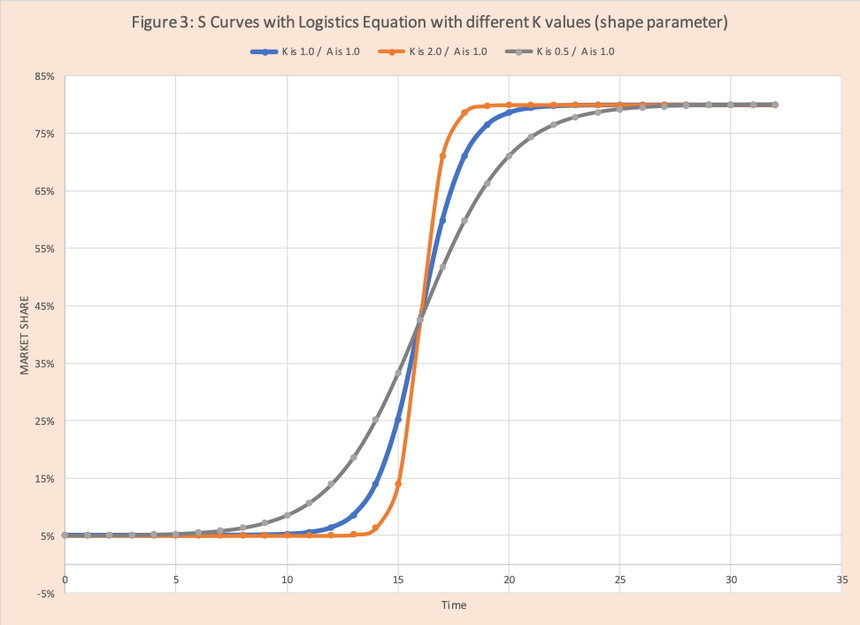
Phase 1: Slow initial growth (The lag phase)
Phase 2: Rapid exponential growth (The log phase)
Phase 3: Plateau (The stationary phase)
When you're in Phase 1, it looks like nothing is happening. This is where most people give up on their sourdough starter. It's also where most political movements die out.
But if you understand the pattern, you realize this apparent inactivity is deceptive.
The Tipping Point Mystery
There's a moment in breadmaking when the dough suddenly seems to come alive. Bakers call this the "proof." But nobody can tell you exactly when it will happen. You can only create the right conditions and wait.
Likewise, no one can predict exactly when a political movement will reach critical mass. Who could have known that Rosa Parks' simple act of defiance would ignite the Civil Rights Movement? Or that a street vendor's protest would spark the Arab Spring?
The conditions were right. The starter was active. The moment arrived.
This is why politicians and pundits are so often blindsided by sudden social changes. They're looking for linear growth in a world that moves in fermentation curves.
The Three Elements
Every successful fermentation needs three things:
Food (flour for bread, grievances for movements)
Activity (yeast for bread, activists for movements)
Environmental conditions (temperature/pH for bread, social/economic conditions for movements)
Miss any one of these, and nothing rises.
Think about failed political movements throughout history. They usually had plenty of grievances and passionate activists. What they lacked was the right environmental conditions for those ideas to spread.
When Fermentation Goes Wrong
Anyone who's made bread knows about “overproofing” - when fermentation goes too far and the dough collapses.
The same thing happens to political movements. They can:
Rise too fast and collapse under their own weight
Ferment too long and lose their strength
Become contaminated by outside influences
This explains why some revolutions succeed while others implode.
The Power of Patience
Making good bread teaches you patience. You can't rush fermentation.
But here's the beautiful part: once you understand the pattern, you can work with it rather than against it.
Whether you're:
Building a business
Growing a following
Starting a movement
Leading change in your community (or yourself)
The principles remain the same.
The Smaller Picture: Creating change through a natural process requires components which must be present for success: The substance, the catalyst, and the right environment. You can’t always see immediate change - as long as you create the right conditions and understand the invisible patterns at work, you can be confident in the process.
Great bakers and great leaders have this in common: they know that transformation happens in its own time, following ancient patterns we're only beginning to understand.
I hope you got some value out of this and, as always, thanks for reading.
Oliver
P.S. My sourdough starter? It wasn't dead after all. I just needed to be patient. Sometimes the most powerful changes are happening just below the surface.